
Manufacturing Growth Stalls Amid Trade Policy Uncertainty
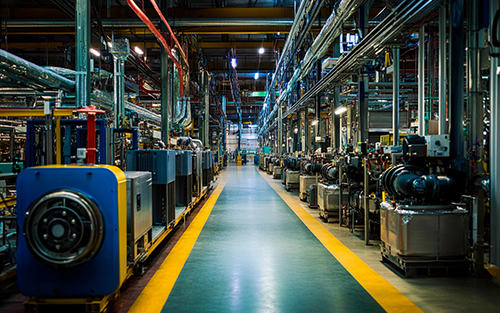
Manufacturing sector shows limited growth momentum in latest quarter
Global Manufacturing Faces Growth Standstill Amid Trade Policy Shifts
Current Market Overview
Manufacturing sector performance remains largely unchanged since Q1 2025, according to Interact Analysis. The latest Manufacturing Industry Output Tracker reveals persistent stagnation across global markets. Uncertainty surrounding US trade policies continues to be the primary factor suppressing growth and investment activity.
Regional Performance Analysis
The global manufacturing landscape presents a divergent pattern across major economic regions. While Europe faces potential contraction, China and the United States are positioned for modest expansion. The overall worldwide manufacturing output is projected to increase by approximately 2% in 2025, though this growth remains unevenly distributed.

US tariff uncertainty continues to impact manufacturing investment decisions
European Manufacturing Landscape
Europe’s industrial sector demonstrates a notable split between established and emerging economies. Traditional manufacturing powerhouses including Germany, France, and Italy are experiencing stagnant conditions. Conversely, smaller manufacturing economies such as Poland, Spain, and the Czech Republic are gaining market share and showing positive growth trajectories.
Americas Market Conditions
The manufacturing outlook throughout the Americas remains closely tied to US economic performance, which currently faces significant uncertainty. Despite these challenges, increasing nearshoring investments present substantial growth opportunities for regional manufacturers seeking to optimize their supply chain strategies.
Machinery Sector Challenges
The global machinery industry confronts multiple simultaneous pressures. Previous elevated interest rates led to production declines and inventory accumulation, necessitating extended destocking periods. The recent implementation of US tariffs has further complicated recovery efforts, creating additional barriers to sector growth.
Strategic Recommendations
Manufacturers should consider several strategic approaches in this environment:
- Diversify supply chains to mitigate tariff-related disruptions
- Focus on operational efficiency through automation investments
- Monitor trade policy developments for timely strategic adjustments
- Explore emerging market opportunities in growing European economies
Future Outlook
Despite current challenges, manufacturing sector growth of 2.1% is anticipated for 2025. Companies that adapt strategically to evolving trade conditions and invest in operational resilience will be best positioned to capitalize on emerging opportunities in this complex global landscape.
The comprehensive Manufacturing Industry Output Tracker provides detailed analysis across 102 industries and 45 countries, offering valuable insights for strategic planning in these uncertain market conditions.







LEAVE A COMMENT