
Non-Contact 3D Vibration Analysis for Drones
Advanced 3D Stereo Imaging Measures Drone Vibration Without Contact
Understanding Multicopter Dynamics and Vibration Challenges
Multicopter drones utilize several rotors for lift and movement, offering superior agility compared to traditional helicopters. These unmanned aircraft excel at hovering, sharp directional changes, and complex maneuvers by adjusting individual rotor speeds. Consequently, their flexibility makes them ideal for tasks like aerial photography, infrastructure assessment, and search and rescue.
However, like all drones, multicopters experience vibration during operation. Excessive shaking can reduce flight stability, shorten battery life, and accelerate wear on components. Therefore, precise vibration analysis is crucial for maintaining performance and safety.
A Novel Approach to Vibration Measurement
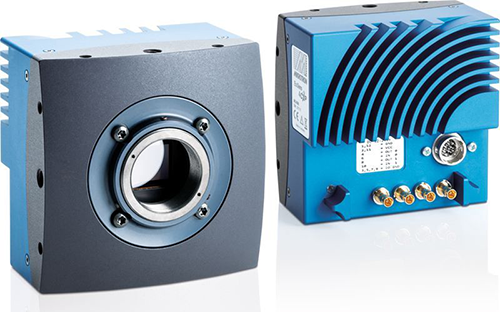
Engineers from Hiroshima University have developed an innovative technique for analyzing vibrations on a hovering multicopter. They employed a model-tracking 3D Digital Image Correlation (3D-DIC) method using two Mikrotron EoSens 2.0CXP 2 cameras. This non-contact system captures stereo images at 500 frames per second, enabling detailed 3D vibration analysis across thousands of points on the drone’s surface.
This method identifies high-vibration zones during flight, helping to spot potential structural issues before they require costly maintenance. Moreover, as a non-contact solution, it does not interfere with the drone’s natural flight characteristics.
Inside the Experimental Setup
The research team used a DJI Mini 4 Pro quadcopter for their tests. They applied a random pattern and twelve markers to its body to assist with tracking. The drone hovered two meters above the ground, with rotors spinning at about 100 revolutions per second.
Two Mikrotron cameras with 50mm lenses were placed on the ground, supported by LED lighting. They recorded 8-bit RGB video at 1920 x 1080 resolution, with a 1.0 ms exposure, for 10 seconds. Data was sent to a PC via a CXP-12 frame grabber for processing.
A high-resolution 3D point cloud of the drone was created using a ZEISS 3D scanner. The model was then simplified to 3518 points, allowing visualization of vibration frequencies up to 250 Hz.
Results: Visualizing Vibration Patterns
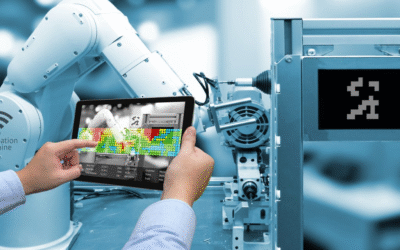
Color-mapped 3D images clearly highlighted areas of significant vibration, showing both frequency (Hz) and intensity (amplitude). This visual data helps engineers understand how different parts of the drone respond during operation, supporting more informed design and maintenance decisions.
Conclusions and Future Applications
Hiroshima University successfully validated their 3D-DIC method for measuring localized vibration on a hovering multicopter. Unlike traditional sensors such as accelerometers, this technique does not require physical contact or attachment, eliminating interference with flight performance.
Looking ahead, the team aims to refine the system for deeper insights into drone dynamics and structural behavior. This approach holds promise for broader industrial automation applications, including robotic system monitoring and quality control in manufacturing.
Case Study: Practical Use in Industrial Automation
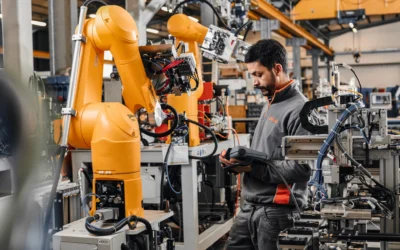
This non-contact vibration measurement method can be applied beyond drone testing. For example, in factory automation, it can monitor conveyor systems, robotic arms, or assembly line equipment without disrupting production. Early detection of abnormal vibrations helps prevent downtime and supports predictive maintenance strategies.
Expert Analysis: The Value of Non-Contact Sensing
From an industrial automation perspective, non-contact measurement systems represent a significant advancement. They allow continuous monitoring without hardware installation or system modification. As a result, companies can improve reliability and reduce maintenance costs across various applications, from motor testing to structural health monitoring.
About Mikrotron and SVS-Vistek
Mikrotron, now a brand of SVS-Vistek GmbH, specializes in high-speed cameras for industrial and scientific use. The company is part of TKH Vision, a division of TKH Group N.V., a global technology firm focused on smart vision, manufacturing, and connectivity systems. TKH employs over 6,000 people and operates across Europe, North America, and Asia.
Frequently Asked Questions
What is 3D-DIC vibration analysis?
3D Digital Image Correlation is a non-contact optical method that measures vibration by tracking surface patterns using high-speed cameras.
Why use two cameras in this setup?
Two cameras provide stereo vision, enabling accurate 3D modeling and vibration measurement across the drone’s surface.
How does this method benefit industrial automation?
It allows vibration monitoring without physical sensors, making it ideal for delicate systems or environments where contact measurement is impractical.
What types of equipment can be tested with this system?
Besides drones, it can analyze vibrations in motors, conveyors, robotic arms, and other machinery used in factory automation.
Can this technique be used for real-time monitoring?
With sufficient processing power, the system can provide near-real-time data, supporting immediate diagnostics and predictive maintenance.









LEAVE A COMMENT