
Redfish-Embedded PLCs for Data Center Cooling
Redfish-Embedded PLCs Transform Data Center Cooling Management
The Data Center Cooling Challenge
The exponential growth of artificial intelligence, IoT, and cloud services continues to drive unprecedented demand for data center capacity. Consequently, advanced cooling technologies have become critically important for maintaining operational efficiency and equipment reliability. According to Frost & Sullivan research, the data center cooling market is projected to expand from $8.20 billion in 2020 to $18.50 billion by 2030, representing a compound annual growth rate of 8.5%.
Cooling represents approximately 40% of total data center energy consumption according to U.S. Department of Energy studies. As computational demands increase, components generate more heat that can damage sensitive electronics and increase power consumption through elevated electrical resistance. Therefore, efficient thermal management has become essential for both operational reliability and energy conservation.
Understanding Redfish Protocol
Redfish serves as the universal standard for data center management communication. This RESTful web-based protocol enables seamless interaction between diverse data center components regardless of manufacturer. Through a single interface, Redfish allows comprehensive management of servers, cooling systems, and power distribution equipment.
The protocol supports automated maintenance tasks including power threshold configuration, remote recovery procedures, system monitoring, and event response. Its standardized schema enables consistent management across different cooling technologies, from traditional air conditioning to advanced liquid cooling systems.
Integrated Control Solutions
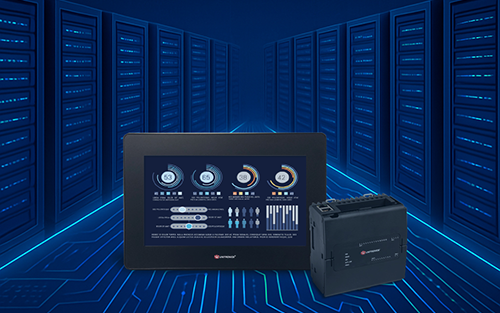
Redfish-embedded PLCs eliminate the need for communication gateways by natively supporting the Redfish protocol. These controllers can simultaneously manage industrial automation tasks while communicating directly with data center management systems. This integration enables real-time data exchange between operational technology and information technology systems without protocol translation.
Traditional PLCs require separate gateways to convert industrial protocols like Modbus or EtherNet/IP into Redfish-compliant commands. However, Redfish-embedded controllers directly exchange JSON payloads with management systems, reporting thermal conditions, equipment status, and alarm information through standard HTTP methods.
Practical Applications and Benefits
- Real-time Thermal Management: PLCs continuously monitor environmental sensors and adjust cooling equipment to maintain optimal operating conditions
- Predictive Maintenance: Long-term data collection enables trend analysis and proactive equipment maintenance scheduling
- Remote Operation: Authorized personnel can monitor and adjust cooling parameters from any location with network access
- Comprehensive Monitoring: Integrated systems track temperature, humidity, airflow, and coolant flow throughout facility cooling loops
- Automated Response: Predefined conditions trigger immediate actions, such as increasing cooling capacity during temperature spikes
Industry Impact and Future Outlook
The integration of Redfish protocol within industrial controllers represents a significant advancement in data center automation. This technology provides unprecedented interoperability between building management systems and IT infrastructure. According to Goldman Sachs Research, U.S. data centers are projected to consume 8% of national power by 2030, making efficient cooling management increasingly critical.
Redfish-embedded PLCs support diverse cooling methodologies including traditional air handling, direct-to-chip liquid cooling, and immersion cooling systems. This flexibility ensures that data center operators can implement the most appropriate cooling strategy for their specific requirements while maintaining standardized management interfaces.
Frequently Asked Questions
What advantage do Redfish-embedded PLCs offer?
They eliminate the need for protocol gateways, enabling direct communication between industrial control systems and data center management platforms.
How does this technology reduce energy consumption?
By enabling precise, real-time cooling control matched to actual thermal loads, systems avoid over-cooling and optimize energy usage.
Which cooling technologies are supported?
The solution works with air-based systems, direct liquid cooling, immersion cooling, and hybrid approaches through standardized interfaces.
What monitoring capabilities are available?
Systems provide comprehensive tracking of temperature, humidity, coolant flow, equipment status, and environmental conditions.
How does this support predictive maintenance?
Continuous data collection enables trend analysis to identify potential equipment issues before they cause operational disruptions.






LEAVE A COMMENT